

 Back
There is nothing wrong with dreaming of becoming a professional footballer. The beautiful game has transformed the lives of young men worldwide. For Nigerians, names such as Jay-Jay Okocha, Nwankwo Kanu, Taribo West and John Mikel Obi prove that a boy kicking a ball somewhere in Nigeria can eventually play on Europe’s biggest stages.
But there is a difference between pursuing a dream and gambling your entire future on it. For every Mikel Obi, how many equally talented young men never make it beyond their local clubs?
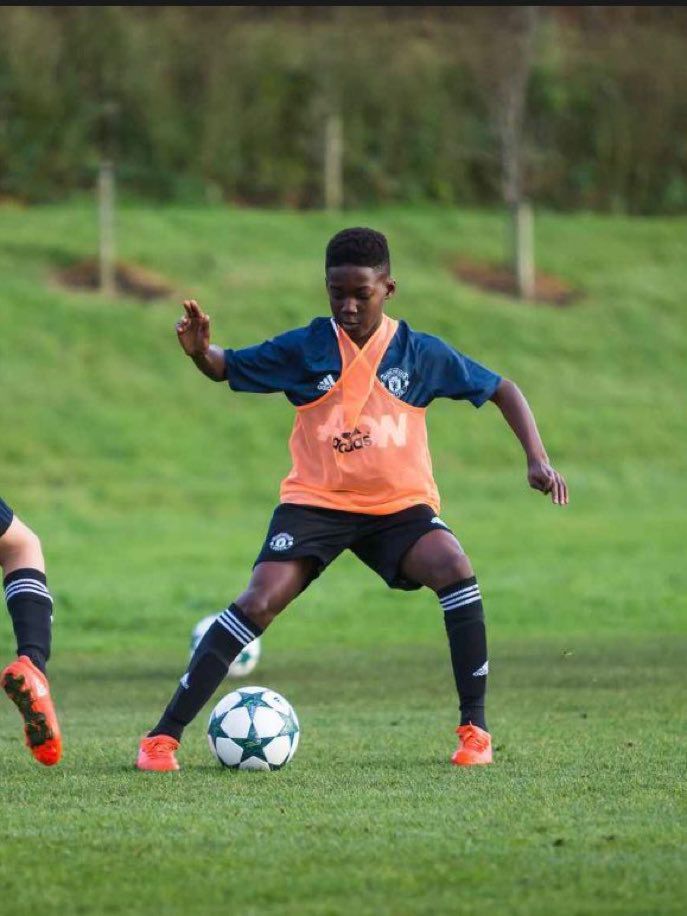
The numbers are sobering. England’s Football Association has cited figures showing that only about 0.5% of players signed by professional clubs at under-nine level eventually make it into that club’s first team.
Read that again! These are not random boys playing on dusty fields, waiting for a Manchester United scout to miraculously pass by. They are already in professional academies, with coaches, facilities, and structured development, yet most never reach that club’s first team.
Yet somewhere in Nigeria, a 27-year-old is confidently saying, “I never blow yet. My time is coming.”
My brother, amen. But wetin be Plan B?
At the highest level, football brings enormous salaries, sponsorships, fame, and opportunities to transform an entire family’s circumstances. But the mistake is looking at Cristiano Ronaldo and Lionel Messi and assuming their careers represent the norm. Injuries, ageing and fierce competition make professional football a relatively short career. Ronaldo and Messi are exceptional precisely because their longevity is not the norm.
And after football, nko?
Some players assume they will become coaches, while others imagine themselves as television pundits. Gary Neville, Roy Keane, Ian Wright, Alan Shearer and Micah Richards have successfully transitioned into broadcasting, but these jobs are competitive too. Not every retired player has the skills, profile or connections to secure such opportunities.
Then there is David Beckham. He retired in 2013, yet his commercial career continued through brand partnerships, including Adidas, business ventures and his co-ownership of Inter Miami. His name and image became valuable assets in their own right.
That is extraordinary. But it is also David Beckham.
If your retirement strategy is *“I will just collect endorsement deals like Beckham,”* abeg, wake up. Most professional footballers will never achieve that level of global fame, let alone someone who has not yet secured a professional contract.
Another dangerous assumption is: “As long as I am good enough, somebody will eventually discover me.” Unfortunately, e no easy like that. A coach may not rate you, a new manager may prefer another player, or an injury may derail your progress. You could spend an entire season warming the bench despite your talent.
Football, like other competitive industries, involves preferences, relationships, and internal politics. You may be talented and still not be selected. Life no balance. There are also limited squad spaces, meaning that even reaching Europe does not guarantee regular playing time or a lasting career.
Imagine finally signing for a third-tier European club. Everybody back home changes their WhatsApp status: “God did it!” Your aunties are announcing in church that their son is now a professional footballer abroad. Fantastic! But what happens when your one-year contract expires and the club refuses to renew it? Another club may sign you. Or nobody may.
Before you know it, you are 29 and wondering what comes next innit?
Watching the 2026 FIFA World Cup made me reflect on how many professional footballers remain relatively unknown to the average fan until they appear on a global stage. With 48 countries participating, the tournament brought together players from hundreds of clubs across dozens of countries. Some were established stars; others represented nations making their World Cup debuts. For some viewers, these players were unfamiliar faces, even though they had already spent years developing their careers in domestic leagues and international competitions. The lesson is that becoming a professional footballer does not automatically make you famous, financially secure or a household name. You can spend years playing professionally without attracting the attention or earning the rewards you imagined when you first started chasing the dream.
Names such as Erling Haaland, Lamine Yamal, Jude Bellingham, Kylian Mbappé and Ousmane Dembélé are familiar to many football fans, but the 2026 World Cup also brought plenty of unfamiliar faces into the spotlight. It was a reminder that, beyond the handful of global superstars everyone knows, countless professional footballers spend years building their careers without becoming household names.
Consider modelling. Imagine a slim, 5’7″ woman refusing university, vocational training or employment because she believes somebody will discover her and turn her into the next Irina Shayk.
At 23: “My breakthrough is coming.”
At 26: “I just need the right connection.”
At 29: “God’s time is the best.”
At 32: “Na one international scout remain.”
At some point, she needs to ask herself, wetin dey happen?
Could she still become a model? Of course. But should she spend ten years building nothing else because she expects to become an international supermodel? Football should not be treated differently simply because the dream is more familiar.
Having a Plan B means building an actual alternative that can pay your bills if football does not work out. Get an education or acquire a marketable qualification. If university is financially unrealistic, consider vocational training or skills in IT, accounting, digital marketing, electrical work, plumbing or logistics. Learn to earn independently through a trade, business or service you can provide while training.
If football remains your primary ambition, establish measurable milestones. Are you getting competitive playing time? Are reputable clubs inviting you for trials? Are you progressing into stronger leagues? Is your performance attracting serious interest? Don’t just tell everybody, “My time is coming.” Show yourself evidence that you are progressing. If you have spent years at the same level without tangible progress, reassess your strategy.
Even professional players must save, budget and prepare for injuries, unemployment and retirement. A two-year contract is not a lifetime salary. No go use signing bonus buy Range Rover when you never know who go renew your contract. Coaching, scouting and other careers after football are possible alternative careers, but they require relevant skills, qualifications or experience. Start preparing before retirement rather than assuming somebody will employ you because you once wore a club jersey.
Your Plan B should not be a prayer you start praying at 30. It should be a plan you are already executing at 18, 20 or 22.
Mikel, Okocha, Kanu and Taribo West are Nigerian success stories worth celebrating. Beckham turned sporting fame into a commercial brand, while others successfully moved into broadcasting or different careers. But these are the names we know precisely because their stories stand out. For every name we know, how many never made the headlines?
The goal is not to discourage ambition. It is to ensure that if the football dream comes true, you can maximise it, and if it doesn’t, you still have a future to build.
So, at what age does reality enter the conversation? At 25? At 28? At 30? At what point should someone still playing for a local team stop expecting a European scout to suddenly appear and change everything? If even children admitted into professional academies face extraordinarily slim odds of reaching the first team, how realistic is it to reach 30 without an education, trade, profession, or stable career because you are still waiting to be discovered?
Because God forbid, the scout may never come.
And after all the “my time will come,” “I go soon blow,” “one day, one day,” and “na connection remain,” if you wake up at 30 and Real Madrid still hasn’t called…
My brother, wetin be Plan B?
 Back
 Top
| Privacy Statement Terms of Service Contact |
Refresh

|
All the best breaking news stories from Apex Football Lite. Optimised for feature phones and low end Android devices, Apex Football Lite helps users with legacy devices and poor network connectivity access the latest football news and live scores. Particularly relevant for breaking football news in Nigeria, Kenya and South Africa.