

 Back
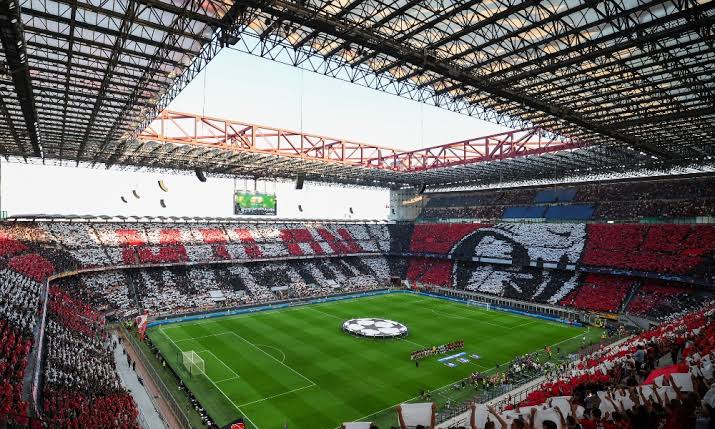
Inter and AC Milan unveiled their new “Generali Stadium” Thursday, which will replace the iconic San Siro stadium from the 2031/32 season.
It will be shaped “low in the body, and it rises up at either end” behind the goals, architect Norman Foster said during a press conference in Milan.
The design aims to bring spectators as close to the pitch as possible, with the stands behind the goals set at a steep 37-degree incline, said David Manica, a stadium specialist who collaborated with Foster on the project.
“The most important thing that we realised when we designed this project is that the San Siro is a feeling,” he said.
“It’s more than a building, it’s a feeling, and everything that we needed to do here was to carry it into the (new) building”.
Manica said the design team “started with proximity”.
“We brought all the seats as close as possible to the field. They could not be any closer, it’ll actually feel as though you’re sitting on the grass,” he said.
They also paid great attention to acoustics: the roof covers the stands, leaving only the pitch exposed, and is designed to “amplify the roar” of the fans, Manica said.
“This building is steeper than many other new buildings are built today, and that’s intentional, because it allows us to bring those seats up and over the field as much as possible, and create that sense of intimacy and atmosphere,” he said.
The stadium, sponsored by the Italian insurance giant Generali, will also be capable of hosting American football games, rugby matches and concerts.
“I want the crowd to come to the new stadium and to feel that excitement that they felt before, and to feel the building, living and breathing with them as it does currently,” Manica said.
AC Milan and Inter paid 197 million euros ($219 million) to acquire the current stadium and its adjacent parking areas, where they intend to build their new, shared home.
The project for the new San Siro — which will have a capacity of 71,500 seats, compared to the current 75,000 — will cost the two clubs 1.2 billion euros.
Construction is set to begin in 2028.
Foster and Manica previously worked together on London’s Wembley Stadium.
Milan’s current stadium — one of the most iconic in European football and often likened to a “concrete cathedral” — is the largest in Italy.
But the venue, which opened in 1926, no longer meets the needs of spectators or the clubs, despite undergoing several renovations over the decades.
San Siro, also known as the Giuseppe Meazza Stadium, will be largely demolished once construction work on the new stadium nears completion.
 Back
 Top
| Privacy Statement Terms of Service Contact |
Refresh

|
All the best breaking news stories from Apex Football Lite. Optimised for feature phones and low end Android devices, Apex Football Lite helps users with legacy devices and poor network connectivity access the latest football news and live scores. Particularly relevant for breaking football news in Nigeria, Kenya and South Africa.