

 Back
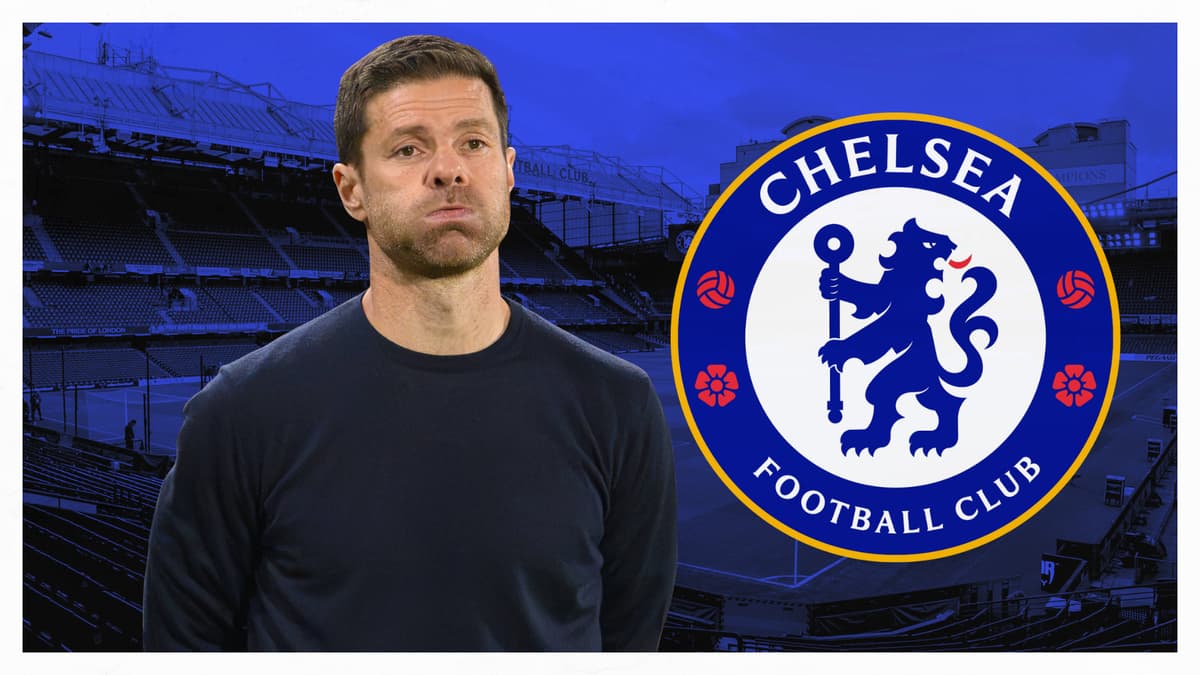
For now Chelsea supporters are happy to remain patient, consoling themselves with the knowledge that Xabi Alonso, a proven winner, is in the middle of an inevitably-uneven transition season as he wrests control from an incompetent executive class.
But their restraint won’t hold for long.
The unspoken tension lurking in the background of Alonso’s tenure is the realisation that if he can’t make the BlueCo project work then nobody can.
World-class coach, Premier League pedigree, the power of ‘manager’ and not ‘head coach’: Alonso is the appointment everyone wanted to make with the setup everyone wanted him to be given. There can be no more excuses of green owners or flawed thinking that might yet be corrected.
If Alonso fails, the entire concept is a failure.
This is precisely what makes Alonso’s chaotic, unfocused, and downright weird start to life at Stamford Bridge so disconcerting. Nobody wants to admit their club is a sink hole, unfixable and by its very dimensions a destroyer of everything it touches.
Nobody wants to be Manchester United. And yet, if this goes on for much longer, it will be hard to believe in any other theory as to why Alonso appears to have leaned into the messiness that has fragmented Chelsea ever since the club changed hands in 2022.
If you thought Enzo Maresca was a tinkerer, a tad frantic in how he never let this young squad settle together, Alonso is inexplicably taking things to a whole new level.
The man who hit the ground running after a mid-season appointment at Bayer Leverkusen, and then kept the same 3-4-2-1 for the next two-and-a-half years, has already burnt through five different formations and – unbelievably – has used seven different back fours/fives and six different midfield twos/threes across ten Premier League matches.
Five distinct formations, seven distinct defensive lines and six distinct midfields in ten games; not even Graham Potter or Mauricio Pochettino went that far and yet they, too, were endlessly twisting dials and pulling levels as the plane went down.
Xabi Alonso has constantly changed things with his Chelsea side
It’s little wonder Chelsea look disjointed. They hit a new tactical nadir at Sunderland on Sunday when Alonso decided to face a midfield-blocking and deep-lying Regis Le Bris team with an ultra-narrow 4-3-2-1 formation, a debut system that almost certainly won’t be repeated.
Inevitably Jordan Henderson, Romeo Lavia, and Moises Caicedo clogged up an already cluttered central midfield while the dual tens, Cole Palmer and Morgan Rogers, struggled to find space against Sunderland’s compressed shape.
Inevitably Chelsea hogged possession – progress, of a sort, given they averaged just 46% before the weekend – but were far too narrow to create high-quality chances.
This was just the latest in a series of errors. Against Manchester United, Palmer was deployed in a very deep midfield role that limited Chelsea’s ability to move the ball through the lines, only for the formation to be normalised in the second half, in time for Alonso’s side to recover from a poor performance and win 2-0.
Before that, an untested double pivot of Henderson and Valentín Barco was overwhelmed by Brentford, whose set-piece and counter-attacking goals made it look like Alonso had never seen them play before.
In a 2-0 defeat to Tottenham Hotspur a strikerless 4-4-2 left Chelsea far too light in the middle and Roberto de Zerbi easily outmanoeuvred Alonso, as evidenced by his midfielders making 16 recoveries to Chelsea’s three.
It's been a mixed start for Cole Palmer and Chelsea
There are plenty more numbers that highlight the strange season Chelsea are having.
Their possession average of 49.9% is only the ninth-highest in the division. Only Crystal Palace have conceded more shots on target than their 50, yet Chelsea top the charts for shots on target taken (53), reflecting the end-to-end nature of their matches.
There have been 3.5 goals per Chelsea game so far, roughly evenly split.
Those kinds of numbers – loose off the ball, free-scoring on it – are fine if this turns out to be a transitional year, as Chelsea fans are no doubt clinging to.
But transitional years are supposed to show flashes of cohesion and a tactical framework emerging, not constant chopping and changing; not formless football in multiple formations.
The two-week international break feels like a significant moment in the Alonso project. Nobody is asking difficult questions just yet. But this is Chelsea and BlueCo. The patience won’t last long.
We are committed in our support of safer gambling. Recommended bets are advised to over-18s and we strongly encourage readers to wager only what they can afford to lose.
If you are concerned about your gambling, please call the National Gambling Helpline / GamCare on 0808 8020 133.
 Back
 Top
| Privacy Statement Terms of Service Contact |
Refresh

|
All the best breaking news stories from Apex Football Lite. Optimised for feature phones and low end Android devices, Apex Football Lite helps users with legacy devices and poor network connectivity access the latest football news and live scores. Particularly relevant for breaking football news in Nigeria, Kenya and South Africa.