

 Atrás
Atrás
AC Milan got their European campaign up and running as they ran out 4-0 winners against RB Salzburg on Thursday night.
Alphadjo Cisse stole the show for the Rossoneri on the night as he netted his first senior career hat-trick inside 50 minutes. It was a ‘perfect hat-trick’ too as he opened with a header, then scored with his left and his right, all from close range.
Goncalo Ramos netted a fourth off the bench to add a bit of extra shine to the scoreline, before Filippo Terracciano saw red in the closing stages. Below is Rohit Rajeev‘s tactical analysis of what was a job well done against a side that were unbeaten in 15 prior matches.
Ruben Amorim made seven changes to the starting line-up from the one that draw with Sassuolo on Sunday. Fikayo Tomori and Davide Bartesaghi came into the defence, Ardon Jashari resumed a place in midfield, while Omari Hutchinson, Ruben Loftus-Cheek, Alphadjo Cisse and Francesco Camarda formed a new-look attack.
Milan started aggressively against Salzburg, pressing high up the pitch with an initial PPDA of 11.5. They adopted a man-oriented pressing approach, with players taking responsibility for their direct opponents and looking to restrict Salzburg’s passing options.
The objective was to prevent Salzburg from comfortably circulating possession, manipulating Milan’s defensive block and finding ways to progress through the press.
Milan’s midfield structure against Salzburg was an interesting variation of the conventional double pivot.
Usually, when a team deploys a double pivot, the two midfielders operate horizontally alongside each other, maintaining a relatively consistent distance between them. However, Milan adopted a different approach in this game.
Jashari operated as the deeper midfielder, while Rabiot was given a more advanced role, effectively acting as an attacking midfielder.
This created a staggered midfield structure rather than a conventional side-by-side double pivot, giving Milan different passing angles and midfield heights.
The staggered midfield structure was designed to help Milan transition into a 3-5-2 in possession. Salzburg looked to press Milan in the wide areas, so Milan wanted to avoid being dragged into wide overloads while retaining numerical superiority centrally.
Jashari dropped into the back three, much like Musah had done previously, allowing Tomori to operate as the additional player on the right.
This created a wider defensive structure with Bartesaghi and Tomori occupying the wide positions, while Hutchinson pushed forward to join Camarda.
Meanwhile, Cissé and RLC dropped into midfield to operate as the two number 8s. The resulting 3-5-2 gave Milan multiple advantages: width in the build-up, central numerical superiority and better options to progress around Salzburg’s pressing structure.
There was a clear contrast in the playing styles of Milan and Salzburg. Milan preferred a patient, possession-oriented approach, looking to circulate the ball and create passing triangles to establish numerical and positional advantages.
Salzburg, on the other hand, favoured a more direct style, looking to progress the ball quickly and attack without relying on prolonged possession.
Two contrasting approaches: Milan prioritising possession and positional combinations, while Salzburg looked to play forward with greater urgency.
Now, this is where Milan’s defensive structure gets interesting. Out of possession, Milan operated in a 4-1-4-1 formation.
The back four consisted of three centre-backs and Bartesaghi, with Jashari positioned directly in front of them as the holding midfielder. Ahead of him were Rabiot, Cissé, RLC and Hutchinson, while Camarda led the press.
Milan had specific responsibilities within this structure: Rabiot and RLC were tasked with neutralising Salzburg’s double pivot. Jashari primarily monitored Kitano, who frequently dropped into the space between Salzburg’s second and third defensive lines.
This allowed Milan to maintain central control while limiting Salzburg’s ability to progress through their midfield.
Salzburg tried to press Milan high using a man-oriented pressing system. They used passes towards Tomori at right-back as a pressing trigger, looking to trap Milan in the wide areas and restrict their build-up options.
If the initial press was bypassed, Salzburg would retreat into a zonal mid-block, prioritising the protection of central spaces.
However, this approach created their biggest problem. Milan deliberately attracted Salzburg’s press towards one side before quickly switching play to the opposite flank.
By drawing Salzburg out of their defensive structure and exploiting the space left on the far side, Milan could bypass the press and progress into the attacking half.
The intelligence of Rabiot was the standout feature of Milan’s first goal. Initially, Rabiot positioned himself beyond Salzburg’s defensive line, in an offside position. However, as the move developed, he intelligently timed his movement to come back onside and receive the pass.
This caught Salzburg’s defenders off guard. Having initially perceived Rabiot as offside, they were forced to react quickly, with two defenders following his movement.
This created the space Hutchinson needed to make his run into the vacated area and exploit the defensive confusion.
It was a brilliant example of how intelligent movement can manipulate defenders and create space for team-mates.
Milan’s second goal was another example of how their positional play created defensive dilemmas for Salzburg.
As mentioned earlier, Milan looked to progress through the centre, deliberately drawing more Salzburg players towards the ball and congesting the central areas.
This opened up space around the box, which Bartesaghi exploited by moving into a wider position.
The defender responsible for Cissé was suddenly caught in a 2v1 situation. When the cross came in, he was forced to abandon Cissé and shift towards Bartesaghi.
This left Cissé with the space he needed to exploit the situation. It was a well-designed attacking sequence that used central attraction to create a numerical advantage and free a player in the final third.
Salzburg’s tactical adjustment in the second half ultimately played into Milan’s hands. In search of a goal, Salzburg became more aggressive in attack. Barry moved out of the double pivot and dropped into the back three, allowing the full-backs to push higher and join the attack.
However, this came at a cost. By breaking up the double pivot, Salzburg lost the midfield stability that had previously provided defensive protection.
This left them vulnerable to counter-attacks, with Milan finding opportunities to exploit the spaces left behind. And that is exactly what happened with Milan’s third goal.
Milan’s approach to defending set pieces was interesting from the very beginning of the game. Despite facing Salzburg’s aerial threat, Milan opted for a very high defensive line. This was partly to compensate for the lack of height in the team.
By pushing the defensive line higher, Milan reduced the space available for Salzburg to attack and allowed Maignan to come off his line and claim deliveries before they could become dangerous. An interesting tactical solution to minimise their aerial disadvantage.
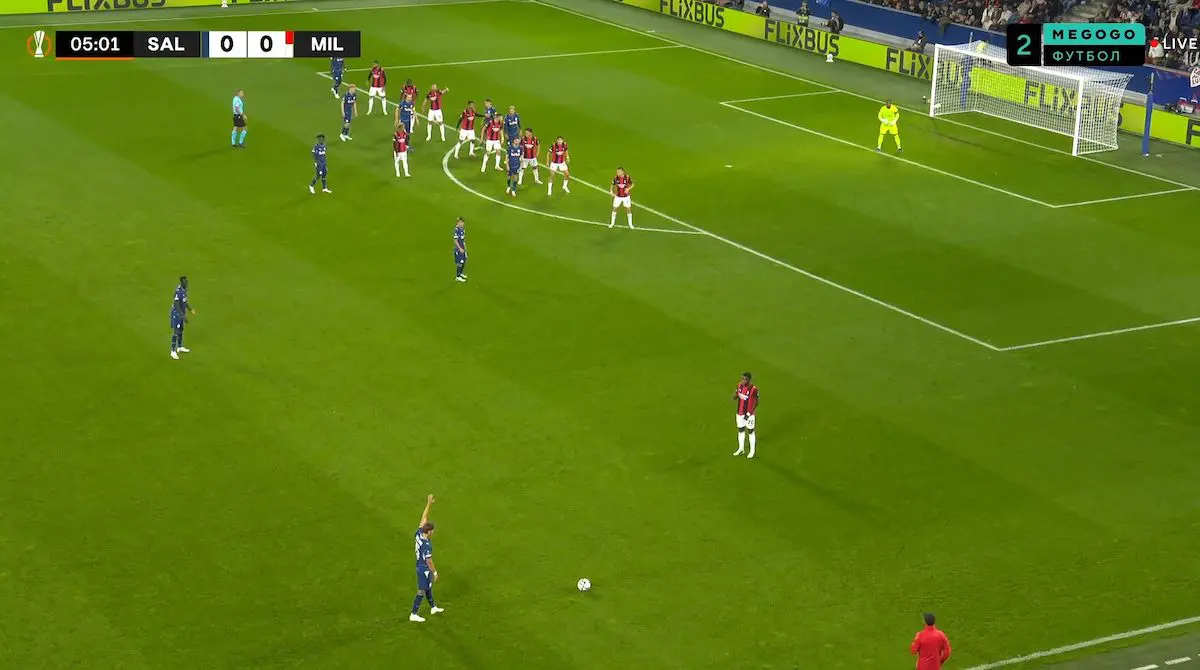
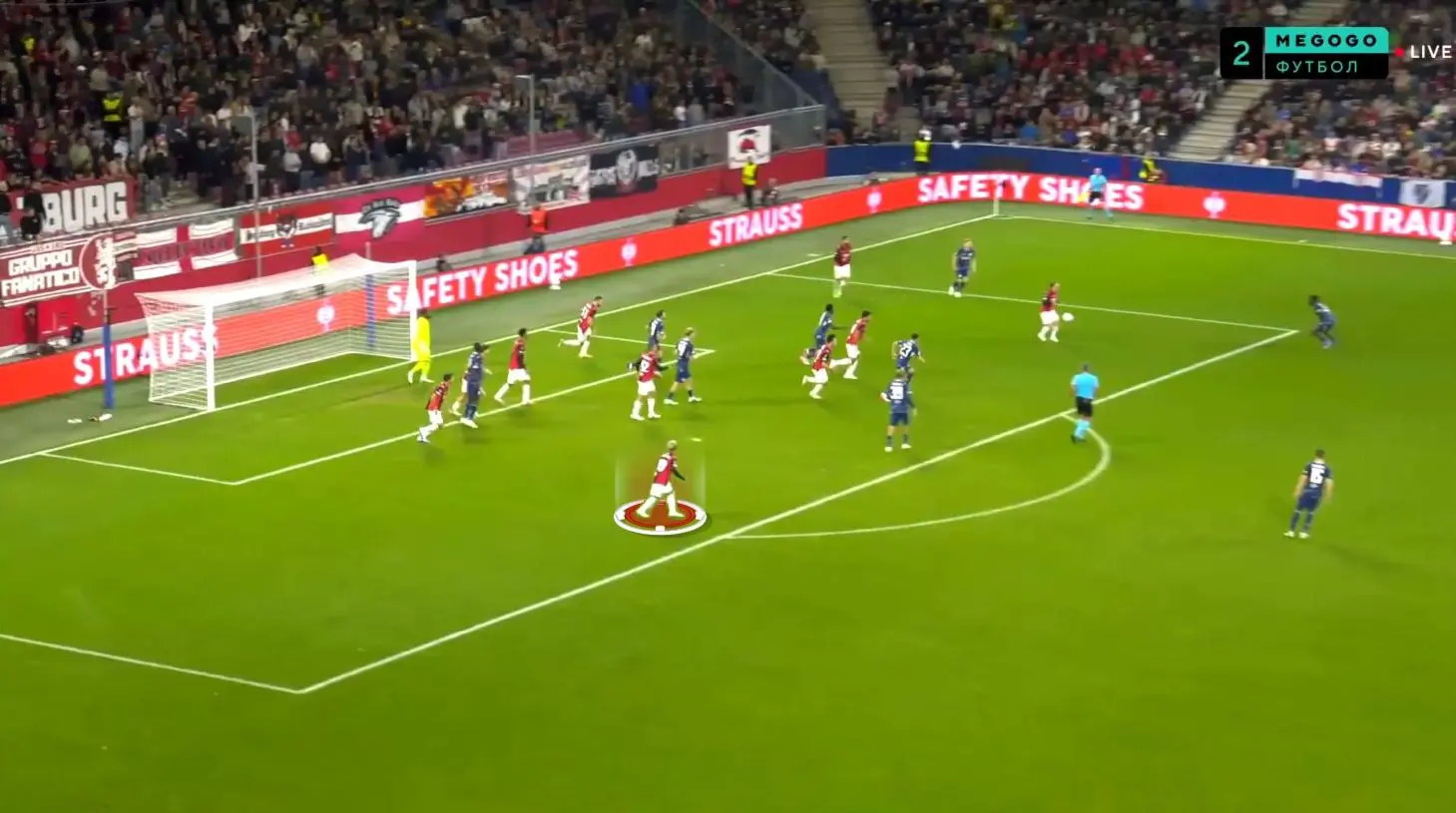
Another interesting detail in Amorim’s set-piece setup against Salzburg. When Salzburg had a corner, Hutchinson was positioned unusually wide inside Milan’s defensive half.
This was a deliberate counter-attacking outlet. If Milan cleared the ball towards his side, Hutchinson would be in an excellent position to collect it and launch a counter while Salzburg’s players were still committed forward.
It is a well-known tactical trick popularised by Sir Alex Ferguson at Manchester United.
 Atrás
Atrás
 Top
Top
| Declaración de privacidad Términos del servicio Contacto |
Refresca

|
All the best breaking news stories from Apex Football Lite. Optimised for feature phones and low end Android devices, Apex Football Lite helps users with legacy devices and poor network connectivity access the latest football news and live scores. Particularly relevant for breaking football news in Nigeria, Kenya and South Africa.