

 Retour
MLB's looming lockout creates an uncertain financial picture, with teams left to wonder whether a salary cap will be coming and just how much money they'll have to spend if it is. Combine that with a weaker-than-usual free agent class and a disproportionate number of stars potentially on the trading block, and we could see a historic amount of wheeling and dealing over the next few weeks. After all, what better way to prepare for a work stoppage than to acquire cost control before the deep freeze sets in?
That activity could, and should, extend to all 30 teams. So we've recommended one trade that every front office should seriously consider before the clock strikes midnight on Dec. 2, from flipping stars near free agency for future assets to landing the last piece of a potential championship puzzle.
The Diamondbacks need pitching, but their first basemen had the worst wRC+ (74) in the league by far, and the second-worst fWAR (-0.9). It’s hard for an offense to score enough runs without any production from the first base position, so why not pursue an old friend in Christian Walker? The Astros have an infield logjam they must address, and Walker is the easiest of that bunch for them to move. He’s expensive, but that should help ease the return. At a bare minimum, Walker will provide power and strong defense, and a return to the desert might unlock something better.
Langeliers is an elite hitter at a premium position, and you shouldn’t give those away lightly. But it’s notoriously hard to maintain offensive production as a catcher year over year, especially if you’re coming off a major knee injury. Add in the fact that Langeliers only has two years of team control left — it’s hard to imagine the A’s becoming serious contenders before the clock starts ticking ahead of his free agency — and it feels like they should cash in for a haul now rather than wait any longer.
As much as I believe the Braves need pitching, offense was the reason for their downfall in the postseason — and it has been just about every year since their World Series win in 2021. Zach Neto isn’t a perfect hitter and he isn’t a good defensive shortstop at all, but he’s supremely talented and would come with several years of club control. The Braves’ defense would take a hit, but they should trade that in exchange for the 30-30 upside Neto possesses.
Mike Elias has apparently infinite job security, but after the way 2026 ended, the O’s could really use a step forward next season. The best way to do so would be to add an anchor to a rotation currently lacking one.
Shane Baz and Kyle Bradish remain tantalizing, and there are tons of young options in the mix from Brandon Young to Trey Gibson to Cade Povich to top prospects Anthony Eyanson, Joseph Dzierwa. But none of those names profile as a true No. 1, or even a true No. 2, in 2027. Running back the Corbin Burnes formula and trading for an established workhorse like Gilbert, who will be a free agent next winter, could go a long way toward raising this team’s ceiling.
It’s time, right? It has to be time. It’s not just the fact that Duran is an awkward roster fit for a team with a ton of lefty corner bats to begin with. But his eight-figure arbitration payment soaks up valuable resources ahead of a crucial offseason. Boston tried to stick to its guns in trade talks around Duran at the deadline and last winter; now, though, it’s time to see reason and simply get whatever you can. That money could be much better used bringing in a bat like Randy Arozarena or Seiya Suzuki in free agency.
The Cubs reportedly pursued a Reid Detmers trade at the deadline but were unable to seal that deal, acquiring Ryan Zeferjahn from the Los Angeles Angels instead. Revisiting those talks now makes sense: Chicago needs pitching, and the Angels should be eager to sell high on Detmers, a pitcher who showed real ace upside this past season. Armed with club control through 2028, the Cubs wouldn’t have to worry about spending major money now, and would be acquiring a pitcher who has the talent to lead their rotation for at least the next couple of years.
The White Sox need pitching, pitching and more pitching if they want to take the next step after a feel-good run to the ALDS. Detmers is a rock-solid mid-rotation arm with upside still yet to be tapped, and the fact that he’s still two years from free agency means he more neatly fits the timeline of a still-young team on the South Side. Now is the time to get aggressive, and Detmers fits too well to get precious.
Despite playing half the time at Great American Ballpark, the Reds scored the fourth-fewest runs in the Majors, highlighting their need to upgrade their lineup. Isaac Paredes isn’t a perfect player, particularly defensively, but he makes a ton of contact (Cincy struck out more than any NL team) and gets on base a lot (they also had the lowest OBP in the Majors). Plus, with how the ball flies in Cincinnati, Paredes can easily hit 25+ home runs pulling baseballs next season, which would go a long way for the Reds alongside the dynamic duo of Elly De La Cruz and Sal Stewart.
The Guardians should cash in Kwan’s stellar second half while they can. Not only will he be a free agent next offseason, but his miserable start to 2026 shows just how little margin for error there is with such a unique offensive profile. There’s no guarantee you’ll be able to flip him at next year’s deadline; best to sell high after a career year defensively in center field and add a piece or two who can help your lineup for years to come.
Parting with a star catcher under control through 2029 is never easy for a team with four straight 100-loss seasons, but let’s be honest with ourselves. Not only is Goodman a flawed (albeit very good) player, but what are the odds that the Rockies will be competitive with him in the next three years? Probably not great. They can extend him — they’ve spent money before — but what are the odds that a contract for an offense-first catcher with major whiff concerns will age well? Again, not great. Goodman would be one of the premier bats available if the Rockies considered moving on, allowing them to get a needed haul to aid their rebuild.
How willing is Scott Harris to bail on homegrown pieces like Spencer Torkelson and Colt Keith, and what sort of value do those players hold around the league? The answers to those questions might determine how likely it is that the Tigers swing a deal for a major infield upgrade.
But they need to add bats somehow after their lineup underperformed in 2026, and Hernandez makes sense as a short-term expenditure who can add some much-needed pop. The Dodgers will no doubt be happy to give him a way, and while he’s far from a perfect player, he’ll give Detroit something they’re sorely lacking — while serving as a right-handed option to compliment Keith, Riley Greene, Kerry Carpenter and Max Clark.
Houston already ran this play a couple of years ago with Kyle Tucker, and now it’s Peña’s turn. The toolsy shortstop has just one year of team control remaining, and the Astros certainly won’t be the ones to pay him in free agency. Best to sell now and acquire multiple pieces for the future, while hopefully clearing your logjam of righty bats.
Overly ambitious? Perhaps. But you can’t deny that Acuña Jr. would be an ideal fit for a Royals team that’s been trying to add more offense to its outfield for years now. Plus, with just two reasonable team options remaining, Kansas City wouldn’t even be on the hook for a new contract that will take an injury-prone player well into his 30s. If the Braves are willing to listen on their star outfielder — and all indications suggest they won’t hang up the phone, at the very least — JJ Picollo needs to be all over this.
We’ve already covered Detmers above, so let’s shift focus to the other homegrown star the Angels should be proactive about moving this winter. Neto is a poor defender at shortstop with a sketchy plate approach; it’s by no means a given that his value won’t crater in 2027, at which point Los Angeles will be loath to sell low and will be stuck carrying him even closer toward his walk year in 2029. With so few compelling infield options in free agency, strike while the iron is hot and land a premier prospect for a player who almost certainly won’t be part of your next competitive team.
It’s clear that something has to change for the Dodgers after they were swept in embarrassing fashion in the NLCS, and that change should really come from their lineup. There’s only so much they can do with so much money and term invested in most of their position player core, but an easy swap to make is to have top prospect Josue De Paula replace the declining Teoscar Hernandez in the outfield.
Hernandez would make for an ideal platoon partner with De Paula, but the Dodgers probably don’t want to pay him $17 million to come off the bench most nights. They probably won’t get much in return for a declining offense-first outfielder, but spending Hernandez’s money elsewhere could make the Dodgers better.
The Marlins have built a nice foundation. The middle infield tandem of Otto Lopez and Xavier Edwards is criminally underrated. They have some emerging power-hitting outfielders in Heriberto Hernandez, Kyle Stowers and Griffin Conine. Joe Mack is already an elite defensive catcher. The rotation is oozing with upside, led by Sandy Alcantara and Eury Perez. However, there are very real holes, too, that must be addressed if the Marlins are going to be competitive.
If Miami is willing to spend to address its needs, it can legitimately compete for a playoff spot. If the team refuses to do so, as has become the norm, why even bother holding onto Alcantara in the final year of his deal? Alcantara pitched well in 2026 and would net the Marlins a nice return if they decided to move him.
If it ain’t broke, don’t fix it. The Milwaukee Brewers have a history of trading elite players approaching free agency like Josh Hader, Corbin Burnes, Devin Williams and Freddy Peralta, so why stray away from that? It’s hard to advocate that they should trade William Contreras, even though he’s entering the final year of control and probably won’t be extended. But why not see what you can get for Trevor Megill right before he hits the open market? Losing Megill would obviously hurt, but the Brewers would still have an elite bullpen to turn to, led by Aaron Ashby and Abner Uribe,
How badly do the Twins want to win in 2027? Ownership is finally signalling a willingness to spend some more money, but I’m skeptical that there are actually the pieces in place to make a real run in the AL given how far away this pitching staff appears to be. Thus, it makes sense to bite the bullet and trade Ryan now rather than lose him in free agency for nothing. He’s a rental, but he could well be the best non-Skubal pitcher actually available this offseason, which should lead to a seller’s market.
Tarik Skubal is the dream Mets target, but it’s against David Stearns’ nature to commit the kind of years and dollars to starting pitchers that Skubal and agent Scott Boras will undoubtedly command. Something Stearns is far more comfortable with is trading for frontline starters, as we saw last offseason with Freddy Peralta, so why not go back to that well?
Obviously, the Mets would hope Joe Ryan would pitch better than Peralta did in Queens, but Ryan is a budding ace on an expiring contract who, if he pitches to his abilities, would give New York a high-end one-two punch alongside Nolan McLean.
You can find a right-handed platoon partner for Austin Wells for relatively cheap, and there aren’t many true center field types that move the needle. That leaves the infield as the most likely place for Brian Cashman to make a splash on the trade market; they simply cannot run back Ryan McMahon at third in 2027, and while George Lombard Jr. and Anthony Volpe offered some reason for optimism this past season, you don’t want to rely on them for too much. Lopez is one of the more underrated players in baseball thanks to his blend of OBP skills and defense, and the Marlins seem at least open to moving him as he enters arbitration for the first time.
The Phillies need to shake things up. They’ve made five straight playoff appearances but have only regressed when it matters most, and the main culprit of those October losses is an inability to score runs. Will Jarren Duran help with that? I don’t know; he’s an imperfect roster fit and is coming off a brutal year. But he also has shown immense upside, and might be able to provide a spark to an outfield in need of multiple reinforcements.
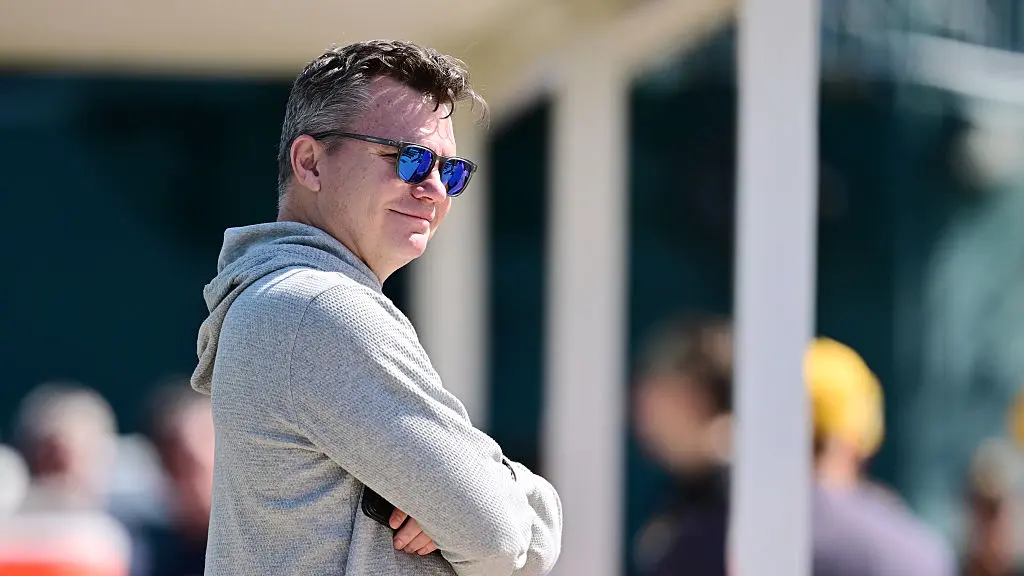
The Pirates had one of the best offensive seasons in franchise history in 2026 despite a clear lack of right-handed thump. Hunter Goodman would not only solve that, but he’d help soften the blow if Pittsburgh were to lose Brandon Lowe in free agency. He’s under cheap control through 2029, which is music to this organization’s ears. He’d cost a lot to acquire, but there’s no better time for the Pirates to make a major splash than right now while they have such a good core under contract.
The Padres’ need for starting pitching couldn’t be clearer, and neither can their lack of appealing, tradable assets. That’d make dealing for a controllable ace, which is the true dream, unrealistic. But what about Sandy Alcantara, who is in the final year of his contract? Alcantara would give the Padres stability they desperately need with Michael King likely headed to free agency, and give San Diego another shot at competing in the NL.
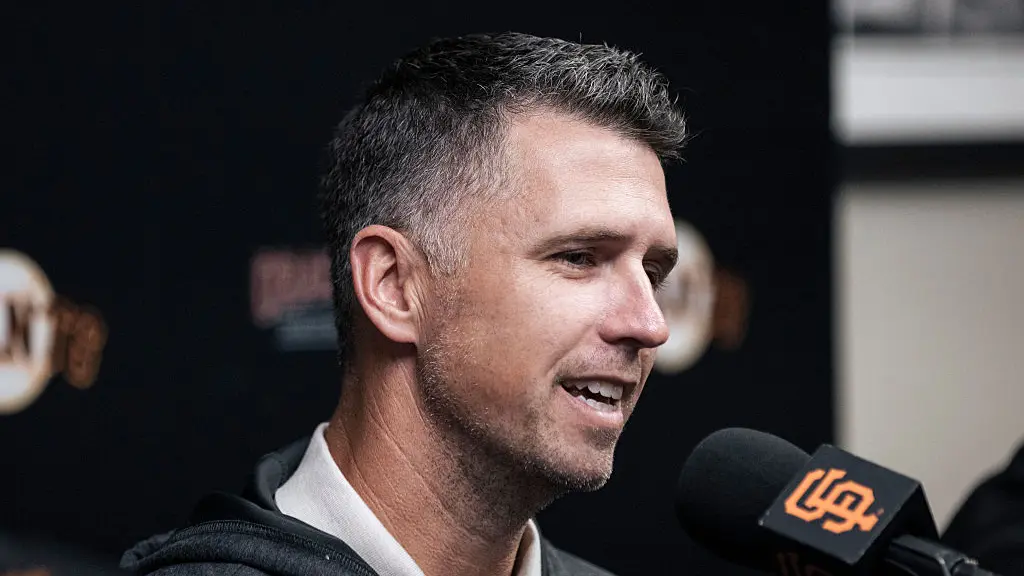
The Giants are in a rough spot right now, with a roster not only lacking talent but also featuring several underwater contracts. Rafael Devers, Willy Adames, Matt Chapman and Jung Hoo Lee are set to make roughly $113 million combined in 2027. To say they aren’t worth that would be an understatement, and they’re all locked in through 2029 at least. Devers is signed through 2033 at over $30 million per. Trading one of those contracts is probably unlikely given that they’re all negative value deals (yes, Devers still has one of the worst contracts in the league despite his hot finish to 2026), but Buster Posey ought to try.
OK, maybe not any starting pitcher; Kade Anderson is off limits, and I’d be loath to give up on Bryan Woo for anything but a king’s ransom. Beyond that, though? There are simply too many arms here between Gilbert, Woo, Anderson, George Kirby, Emerson Hancock, Bryce Miller and top prospect Ryan Sloan. Seattle needs to fix its offense, and their homegrown pitching surplus is the easiest avenue through which to do it.
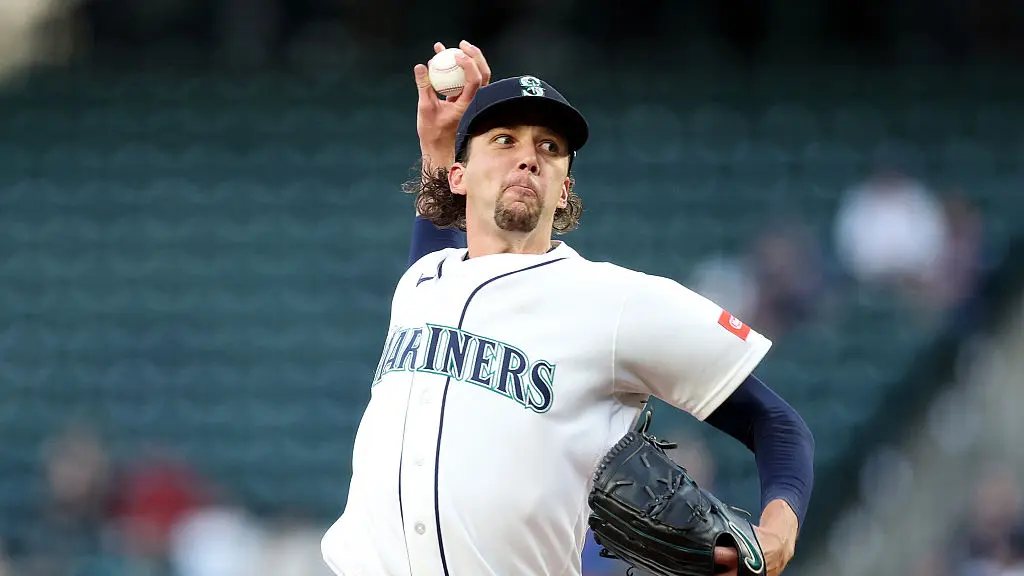
The Cardinals were much better than expected this past season thanks largely to a position player core that’s suddenly littered with young talent. From Alec Burleson to Jordan Walker to JJ Wetherholt, there’s a ton to like about this lineup in 2027 and beyond, and while their rotation has some talent in the Majors and Minors, they lack an ace, or anyone with that kind of upside. I don’t know if the Mariners would be receptive to moving on from Logan Gilbert in their search for more offense, but if they are, he’d be such a good fit in St. Louis (albeit costly to acquire).
Hear me out here. The Rays are not averse to making a splash; remember when they sniffed around Tarik Skubal via trade, and Freddie Freeman in free agency before that? And Elly is exactly the sort of player they’d take a swing on, with three years of control remaining at a premium position at which Tampa has a long-term need. It seems like the Reds are at least willing to listen after De La Cruz shot down their extension offer; the Rays have the prospects to get a deal done, and he’d be around through the opening of their brand spanking new park in 2029 before ceding short to top prospect Grady Emerson.
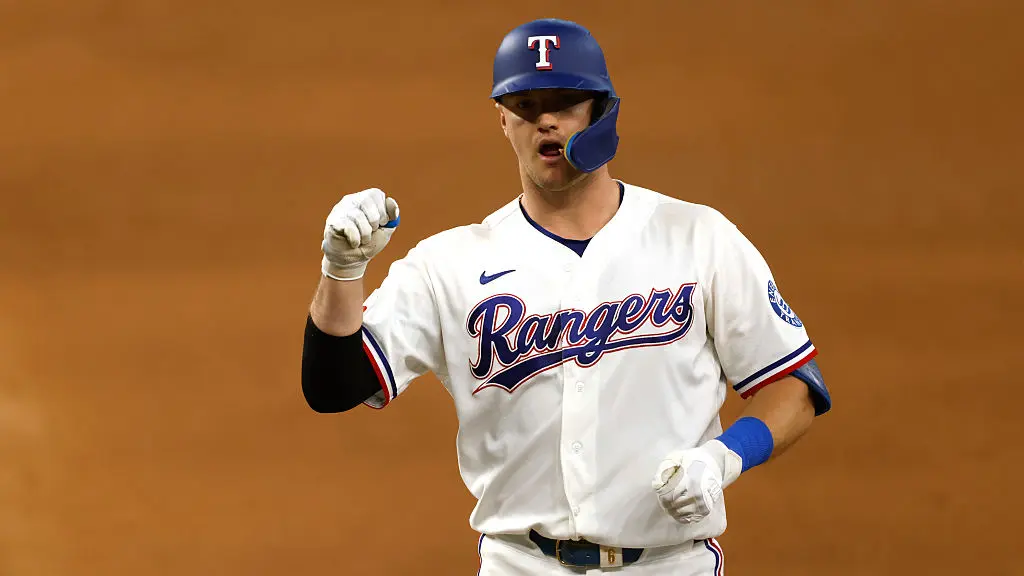
In a perfect world, Texas could sell high on Jacob deGrom after another healthy season, but deGrom’s full no-trade clause complicates matters there considerably. So why not sell high on Jung instead? Top prospect Sebastian Walcott is almost here, and while Jung is coming off a sensational season, he once again played just 104 games due to injury. With just two years of team control remaining now, running the risk of him regressing or getting hurt again feels short-sighted. The Rangers should be in long-term talent acquisition mode.
The Jays could be right back in the mix for an AL pennant in 2027, provided they add at least one impact bat this offseason. Seiya Suzuki would be an ideal fit, but why not swing a trade for Abrams as well if the Nationals are open to it? He could easily slide over to second base, where his glove would hopefully play up and allow Ernie Clement to move back into the super utility role for which he’s best suited.
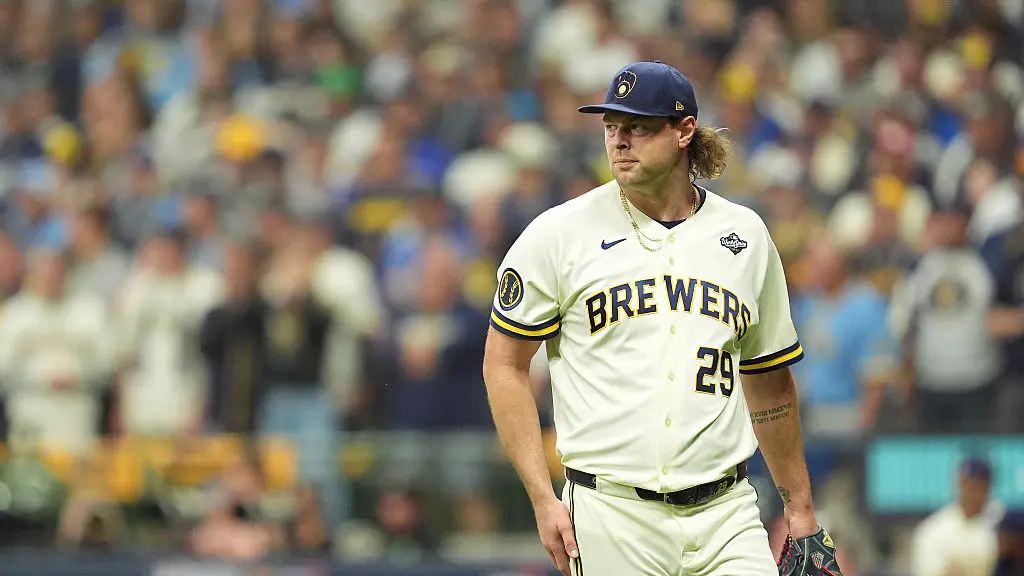
If it weren’t for a historically bad bullpen, the Nationals might’ve actually hung around in postseason contention. It goes without saying that they must address that ‘pen if they want to be competitive moving forward, so why not pursue a guy like Trevor Megill? As mentioned above, the Brewers have reason to trade him, and his expiring contract means the Nationals won’t need to trade the farm for an All-Star-caliber closer. I have long-term concerns about Megill, an older reliever with a history of arm troubles, but a one-year gamble would be a smart one for the rising Nats to take.
 Retour
 Top
| Politique de confidentialité Conditions d'utilisation Contact |
Actualiser

|
All the best breaking news stories from Apex Football Lite. Optimised for feature phones and low end Android devices, Apex Football Lite helps users with legacy devices and poor network connectivity access the latest football news and live scores. Particularly relevant for breaking football news in Nigeria, Kenya and South Africa.